Volvo to Build New Hybrid SUV in South Carolina Plant
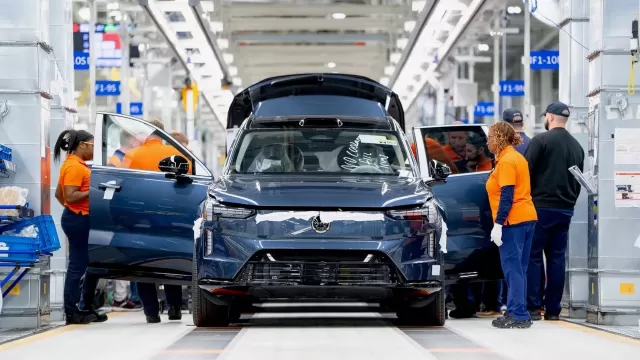
Volvo is expanding its manufacturing footprint in the United States with plans to produce a new extended-range electric vehicle (EREV) at its Charleston, South Carolina facility. This marks the fourth model to be built at the plant, joining the Volvo EX90, Polestar 3, and soon, the popular Volvo XC60 starting in late 2026.
The new vehicle, slated for production by 2030, will be a larger SUV tailored to the American market. Volvo CEO Håkan Samuelsson describes it as a "second generation of hybrids," emphasizing its electric-first character with rapid acceleration and an onboard charger for extended range. Unlike traditional hybrids, this EREV will use its internal combustion engine exclusively to generate electricity, allowing for both home charging and public fast-charging capabilities.
Volvo executives have indicated the new model will fill the space currently occupied by the XC90, suggesting it will be a spacious SUV designed for families and their cargo. While Volvo initially considered going all-electric by 2030, they've since adjusted their strategy, leading to this new hybrid offering and an updated XC90. Although some of the new hybrid SUVs will be exported, current plans exclude shipments to China.
The decision to produce a hybridized powertrain reflects the diverse needs of the U.S. market, where full electrification infrastructure isn't uniformly available. This approach aligns with Volvo's "Build Where We Sell" philosophy, which prioritizes regionalized design, supply chains, and assembly while leveraging common electrical, software, and mechanical architectures.
Volvo's Charleston plant, which opened in 2017, represents a significant investment of $1.3 billion and has created thousands of jobs. The plant's strategic location also serves as a buffer against fluctuating U.S. tariffs, prompting Volvo to accelerate its expansion plans. Currently, 60% of the components for EX90 production are sourced from North American suppliers, with 13% originating from the immediate vicinity of the South Carolina plant. As Volvo continues to increase production, it plans to add second and third shifts, further boosting the region's economy.